ARIA OCEAN · HISTORY AND CONTEXT
How we got
here
A reconstruction of how the problem began, how it was inherited, and why it still needs to be resolved.
Begin the story ↓Editorial note
This section presents the author’s account, based on personal experience and the documentation available. Dates are approximate and are provided solely for reference. Its purpose is to explain how the problem began and help move toward a solution.
Full journey
Estimated reading time · 12–15 minutes
01The origin
≈ 2006 · FLAMINGOS ACQUA
How did the problem
begin?
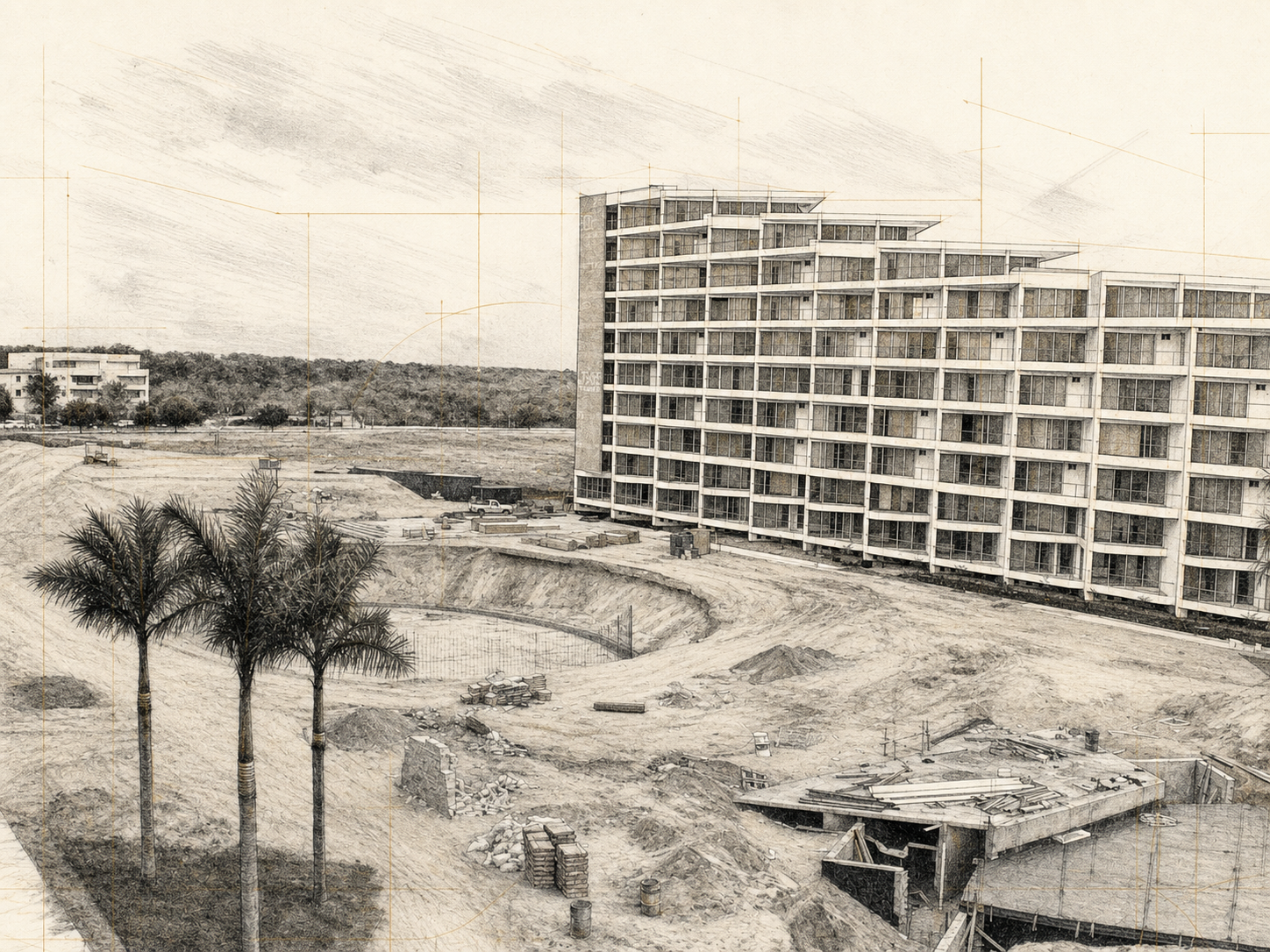
The issue that now needs to be resolved began around 2006, during the original Flamingos Acqua project, the predecessor of ARIA Ocean.
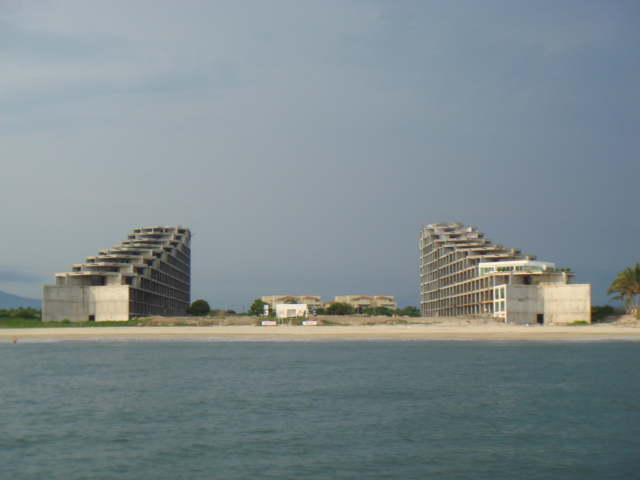
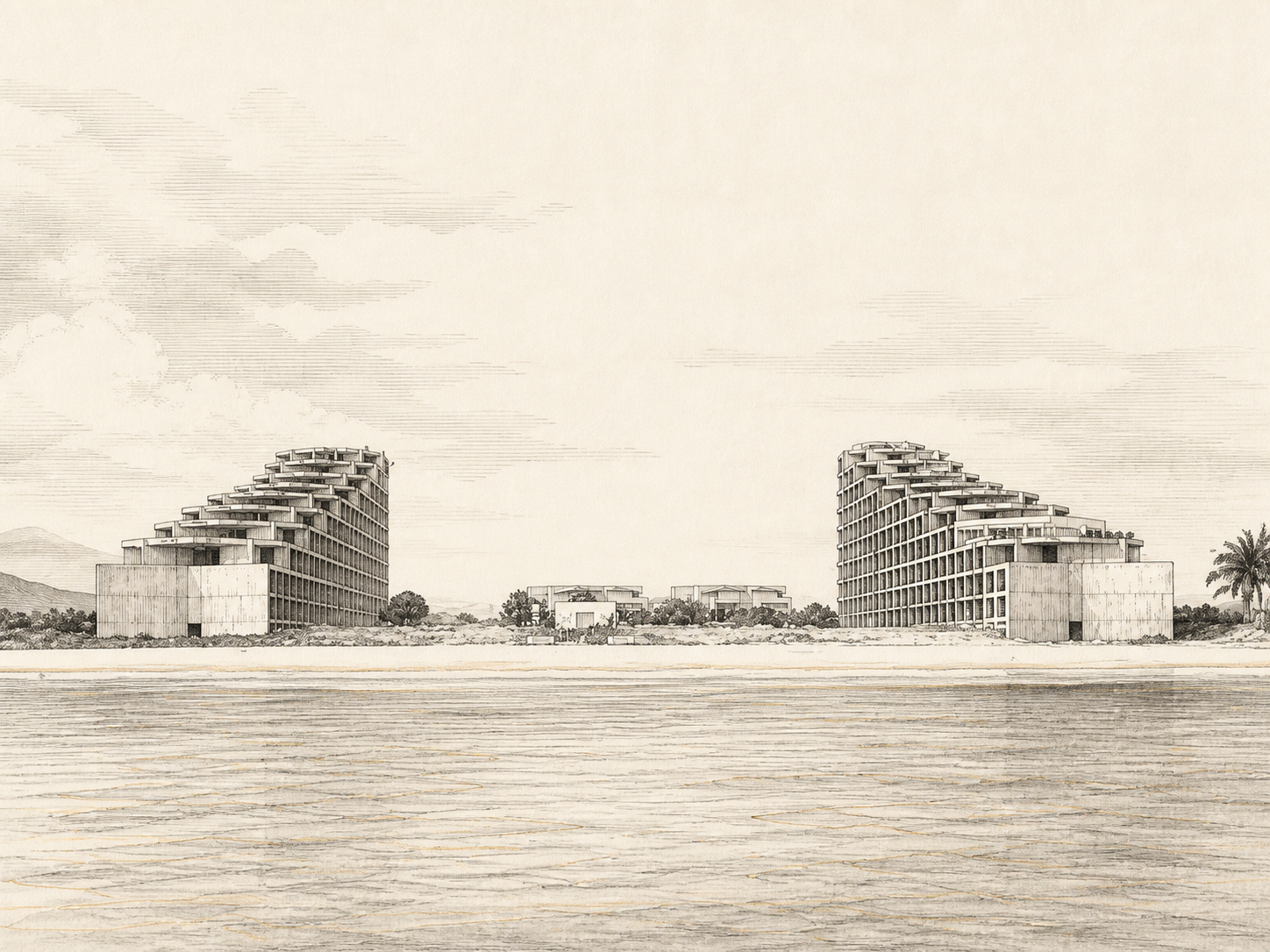 Actual photograph → editorial line drawing
During the project’s planning, EV—the original developer—established several spaces as privately owned areas even though, by their nature and function, they should have been incorporated as common-use areas, as they would be in any other real estate development with similar characteristics.
According to this reconstruction, this was not an isolated omission. It was part of a planned structure that would allow him to retain control of those areas and later obtain additional benefits from his own clients and investors.
This pattern also appeared through extraordinary charges for balconies, furniture, repairs, and other items that had not originally been contemplated. After signing their contracts, buyers were subject to highly restrictive conditions and had few alternatives for taking physical possession of their units and, later, obtaining title to them.
In addition, various properties were delivered with significant construction deficiencies, which led to several lawsuits against the developer.
Another example was the involvement of EV’s brother as the authorized contractor for repairs related to those deficiencies. Based on the author’s experience, the prices were considerably above market rates and included an additional financial benefit for EV.
These operations were not carried out solely by the developer. During that stage, relatives and people close to him also participated, including his mother, brother, uncle, cousins, and friends, as well as attorneys, notaries, and public officials at the time.
The core of the problem
What buyers understood
did not match the legal reality.
Condominium + pool + sundecks + access points + service areas + common areas.
Condominium + certain areas registered and legally maintained separately.
Within that same structure, the purchase promise agreements failed to clearly explain that some areas used as common spaces would remain legally separate from the condominium units.
Buyers assumed in good faith that the pool, sundecks, access points, service areas, and other common spaces were proportionally included—as undivided ownership interests—in the properties they were purchasing.
02The problem changes hands
The properties changed hands.
The problem remained.
Over time, the condominium units were resold and new owners arrived. With each transaction, part of the history was lost or distorted, even changing the perception of who had originally caused the problem.
For new buyers, there appeared to be no reason to ask whether the areas everyone used as common spaces actually belonged to the condominium association or were registered in a private individual’s name. The natural assumption was that they were part of the development.
The original owners who knew about this situation did not disclose the background when reselling their units, protecting their own interests. As a result, many subsequent buyers were completely unaware of the problem they were inheriting.
This also helps explain the historical pattern of prices. Units at Flamingos Acqua and, later, ARIA Ocean were generally marketed below the values of other comparable developments in the area.
“The price paid for the condominium units did not include full acquisition of these areas.”
This circumstance was not clearly explained to new buyers, but it helps account for the historical price difference, the limitations of the amenities, and the mismatch that still exists in property values.
03A turning point
≈ DECEMBER 2013
How did the areas reach
their current status?
One of Flamingos Acqua’s original investors had direct knowledge of the project’s structure and the people who participated in its development. This information was not available to most buyers or to those who joined later.
That knowledge enabled him to pursue more precise legal action directly against the developer.
After several years and different legal strategies, he obtained favorable rulings in various lawsuits. Around December 2013, the areas were legally awarded to his estate and recorded in the Public Registry of Property.
The award had two primary objectives: to recover the capital he had invested and to protect areas that, by their function, could be considered of common interest.
At that time, there were numerous creditors, including certain public authorities. Preventing the areas from ending up in the hands of different third parties was essential, because that would have made regularizing the condominium even more complex, time-consuming, and costly.
The current titleholder did not create the original structure or separate the areas from the condominium.
He legally received a situation that already existed and, since then, has pursued different alternatives to resolve it.The documentation supporting this history has been reviewed by different legal advisors retained by the condominium owners themselves. The most recent analysis was conducted this year by the H&B law firm in Mexico City, in addition to the reviews performed by other specialists over approximately thirteen years.
This platform is not intended to publish the legal case file or delve into legal terminology. Its purpose is to provide a brief, straightforward explanation so that everyone can understand the same background.
04A difficult cycle to break
Why wasn’t it resolved earlier?
For years, the privately owned areas have been used and enjoyed by condominium owners as though they were common areas, without that use representing a direct cost to them.
This reduced the incentive to resolve the problem. Those who use the areas can continue to enjoy them without acquiring them, paying temporary rent, or assuming the obligations associated with ownership.
At the same time, the titleholder of the areas continues to incur maintenance assessments and outstanding balances on other properties he retains within the development, particularly his condominium units.
Despite this imbalance, the titleholder has formally acknowledged those outstanding amounts. Part of the payment has been credited through properties transferred, donated, or sold as in-kind payment under prior regularization agreements.
However, the agreements were not completed because there was no continuity or follow-through by a representative formally appointed by the condominium owners.
In simple terms, leaving the situation unchanged may appear convenient: the areas continue to be used without payment for their use or acquisition, while the legal owner accumulates outstanding balances owed to the administration.
Leaving it unresolved may look likean immediate savings.
But that supposed savings is lost through lower property values.
Yet that apparent advantage ultimately harms everyone. Until ownership of the areas of common interest is regularized, legal certainty, the ability to improve amenities and facilities, the development’s overall perception, and ultimately the value of every condominium unit will remain limited. It is a negative cycle: leaving the issue unresolved may seem to provide immediate savings, but those supposed savings are clearly lost through lower property values.
05Years spent trying to resolve it
Why were the previous agreements
never completed?
Over the years, there have been proposals, donations, exchanges, legal proceedings, and various agreements. These include the agreements reached in 2015 and the one entered into in 2018.
These efforts produced progress, but they did not complete the regularization process. The condominium owners have lacked clearly defined leadership with representation, continuity, and genuine decision-making authority.
On repeated occasions, responsibilities requiring direct participation by specialists or duly authorized and qualified representatives were delegated to the property manager.
Individual initiatives also emerged from certain owners using ineffective methods, such as WhatsApp chat discussions and private or isolated meetings.
These forums can be useful for exchanging opinions, but they do not replace a formal process with representation, complete information, professional expertise, and the ability to carry out decisions.
Good intentions are valuable, but they are not enough to solve problems of this complexity. Some initiatives interrupted progress, generated new costs, and were abandoned once their promoters realized that the situation was different or more complex than they had imagined.
The constant turnover of committees has also made the problem worse. Each new administration must relearn the history, review the documents, and understand the previous agreements.
To do so, new legal and accounting advisors are regularly retained to study the same problem again. In some cases, the expectation is to obtain a different or more favorable interpretation influenced by information shared in chats or by individual opinions, instead of starting with the documented background.
Each committee also arrives with its own priorities. Although many of them are necessary, they do not always represent the actions with the greatest impact on the development.
The people change.
The problem starts over.
This has favored small, isolated improvements that may be visible but are rarely recognized by the market as a real and tangible increase in the condominium’s overall value.
The result has been repeated analyses, rising costs, and extended timelines without reaching a definitive solution.
The lack of continuity turns assemblies and working meetings into repetitive debates fueled by incomplete information, rumors, and biased accounts. This eventually wears down participants and causes many people to withdraw.
Some people connected to EV continue to participate actively as owners in chats and assemblies. From the author’s perspective and experience, some of their interventions serve personal interests and reinforce distorted accounts that make any real and tangible settlement more difficult.

06From the origin to the opportunity
Today’s owners
did not create this problem.
They inherited it.
Learning this history is not intended to reopen the conflict indefinitely or seek new confrontations.
Its purpose is to understand why the current mismatch exists, why it has not been resolved, and how it has influenced the perception and value of the properties.
But as long as the areas of common interest retain their current status, market forces will continue to limit the value of the condominium units.
Renovating each unit or installing luxury finishes is no longer enough. If the development as a whole, its areas of common interest, and its legal status do not improve, the properties will not be able to reach the value they should command in a sale or appraisal.
Understanding the origin now allows us to examine the solution.
The next video explains how a proportionate investment can correct this mismatch, strengthen the development, and recover part of the value that has historically remained constrained.
Understanding the past allows us to
decide the future.